
Söderholm, Satu
You Could Be Here
2026 / 1
I was born in the 1970s and grew up believing in a world order that is often called rules-based. I have learned to trust the welfare state, national and international institutions and legislation, and the indivisibility of human rights. From a Finnish perspective, all these systems based on common agreements seemed like the basics of life until well into my adulthood. Only later did I truly understand that they have been so precisely from this perspective. For a large part of the world's population, these principles and agreements have of course been mere slogans long before I myself became aware of them.
A significant moment of awakening for me was working as a social worker at a reception center in 2015–2018, when I observed the erosion of the legal protection of asylum seekers from close range. The situation has only worsened since a decade ago – while the eastern border has been concretely fenced off, border walls have as well been built at the level of laws and regulations; the Aliens Act has been amended countless times in recent years, making it increasingly difficult to apply for asylum, in certain situations even impossible. Detention of asylum seekers- a deprivation of liberty, not based on suspicion of a crime or punishment- has been made possible for very long time periods. At the same time, mechanisms such as a citizenship test and income requirements are being added to the legislation, which make it more difficult to settle permanently and build a future in Finland. In particular, the EU Pact on Migration and Asylum, which was implemented on June 2026 and which Finland is applying particularly strictly, breaks many of the principles of equality and justice that many of us have come to believe apply to everyone. More and more people from outside Europe are drowning, starving and freezing to death at our borders or waiting to be deported in return centres, many of which will in the future be located outside Europe.
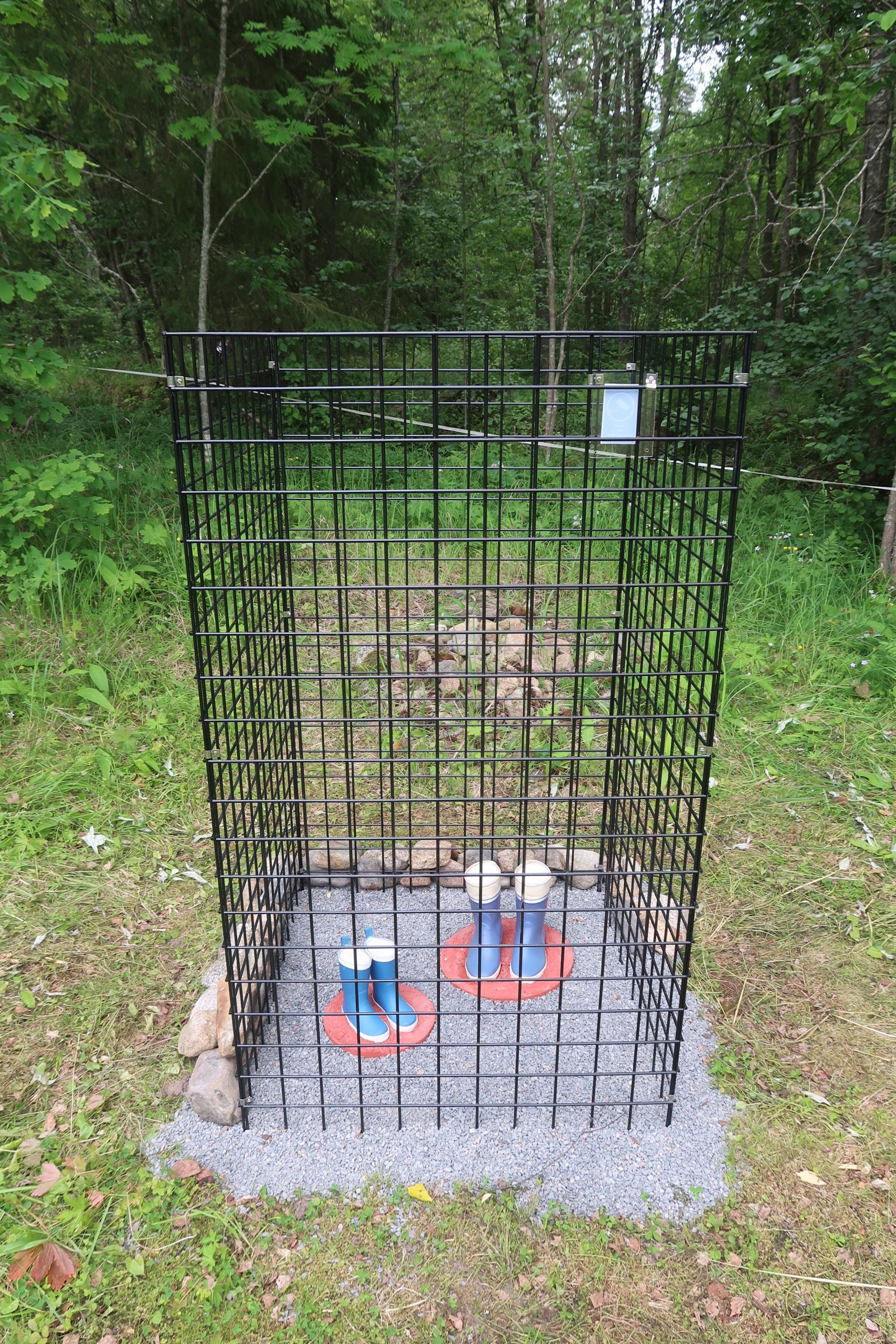
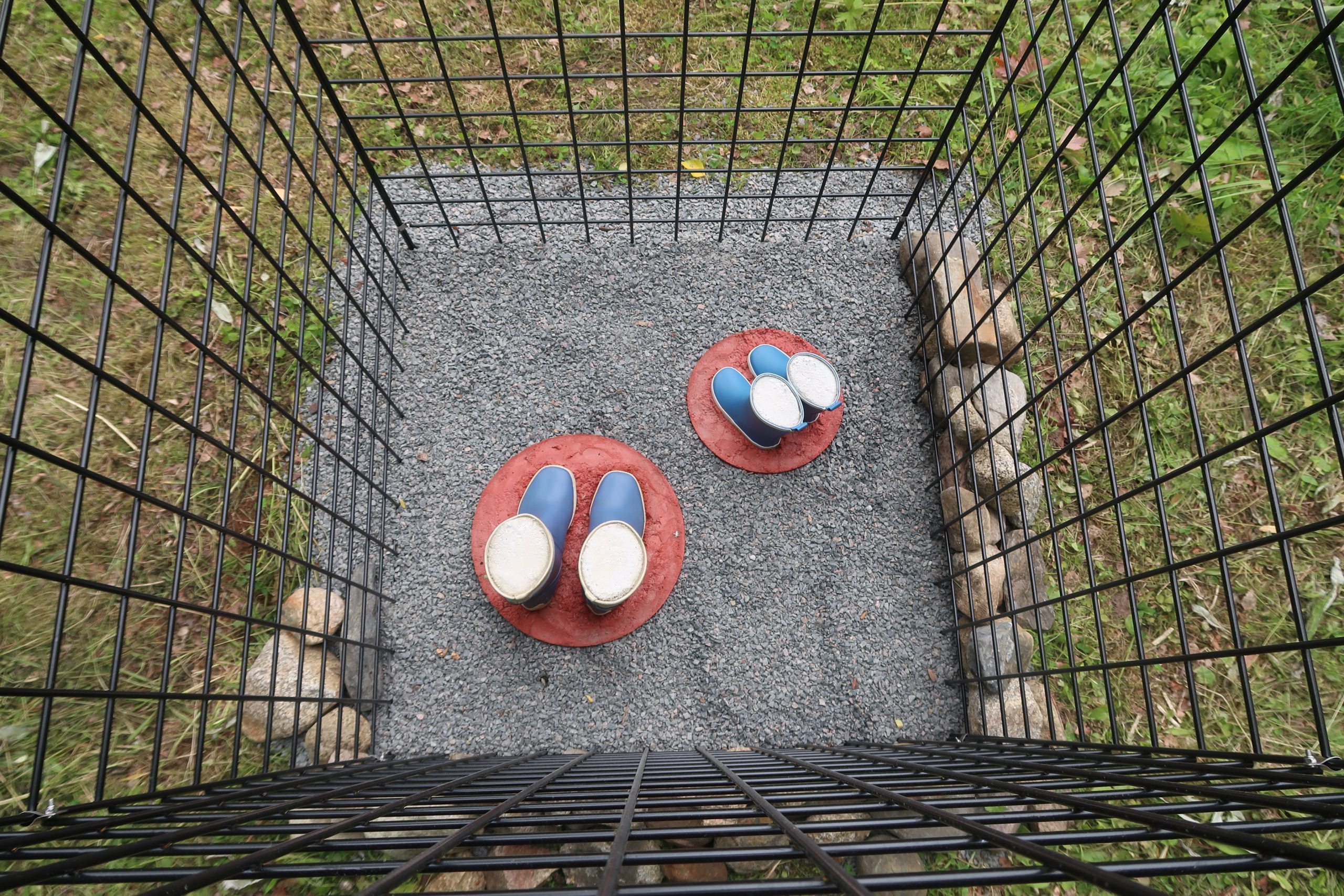
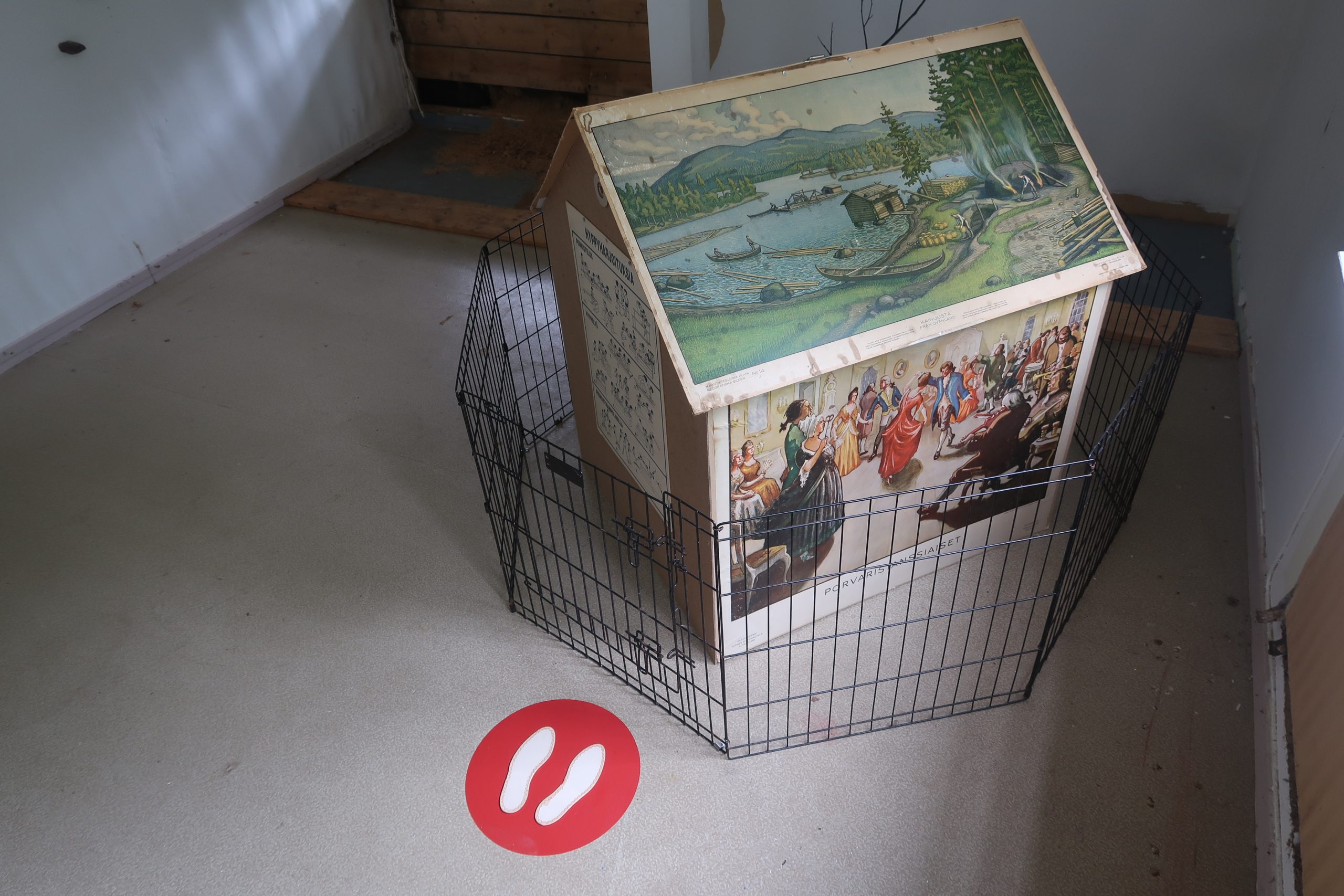
My two-part work ”You Could Be Here” discusses the drastic change in worldview and values which is underway in Finland and Europe. The work consists of two installations, one built unside Rajatalo, the other outside, on the border between the forest and the yard. The pair of works address the exclusionary social practices of Finland and Europe and remind us that it is not our own merit which side of the border fence we happen to be born on.
Images
Interview